Home

AI FORESIGHT / BUSINESS IDEA → EVIDENCE → STRATEGY

Test the future of your idea. Before launch.

AI foresight for business and marketing: research your niche, collect demand signals with scrapers and AI agents, and challenge the concept across market scenarios. Make product, geography and strategy decisions with evidence, priorities and a validation plan.

Validate my businessChoose a nicheFind a pivotMarketing and LSITrends and startups

FORESIGHT / FROM EVIDENCE TO A BUSINESS DECISION

Test the direction before you commit the budget.

Market analysis explains what is happening. Foresight uses that evidence to explore what could change next, and which decisions remain useful across different scenarios. For your business, it provides a way to test an idea, select a market and challenge a marketing strategy before launch.

Current-market analysisDecision-focused foresight
QuestionWhat is growing now?Which changes could create demand for our product?
EvidenceMetrics, segments and explanations of current performance.That evidence plus early signals, drivers of change and critical uncertainties.
OutputA market picture and conclusions about current conditions.Scenarios, business-hypothesis tests and conditions for choosing a strategy.

DATA / SCOPE

A recommendation backed by a body of evidence.

Scraping starts with your niche: we map competitors, products, relevant platforms and customer language. We collect accessible posts, product descriptions, reviews and discussions, preserving source, date and context. Duplicates and irrelevant records are filtered out.

20,000posts before cleaning

An illustrative scope model, not a completed-study statistic. 100 sources × 200 posts = 20,000 records. Comments and product records are counted separately. Actual coverage depends on the niche, data availability and historical depth; we specify it in the brief.

Our scrapers and AI agents make collection, cleaning and comparison repeatable. Rigorous manual research is possible. Repeatedly reviewing tens of thousands of records, comparing periods and keeping conclusions traceable to sources requires a substantial operating process. Automation gives the analyst room to examine meaning, contradictions and business implications.

PROCESS / 01—06

From a business question to a tested strategic hypothesis.

  1. 01

    Frame the decision

    Define the idea, audience, geography, horizon and budget constraints. Identify the decision: launch, enter a niche, pivot or plan marketing.

    Output: research brief and decision criteria.

  2. 02

    Collect niche signals

    Scrapers collect accessible evidence from the source map. AI agents help group topics, needs and recurring questions. We compare geography and historical periods separately.

    Output: a cleaned dataset with sources and dates.

  3. 03

    Assess the trend

    Examine topic share, persistence and spread across independent sources. Separate reposts, seasonality and promotional spikes from behavioural change.

    Output: an evidence-backed signal map with confidence levels.

  4. 04

    Develop scenarios

    Map technological, economic, social and regulatory drivers. Identify uncertainties and explore alternative paths for demand, competition and channels.

    Output: scenarios and the conditions that would support them.

  5. 05

    Challenge your concept

    Assess who needs the product and why in each scenario. Identify fragile assumptions, alternative segments, markets, positioning or a pivot.

    Output: priorities for what to develop, change or test before scaling.

  6. 06

    Turn findings into action

    Plan interviews, offer tests, prototypes or marketing experiments. Define the measures and signals that would support the decision or trigger a strategic review.

    Output: a validation roadmap and monitoring indicators.

SIGNAL / EVIDENCE / DECISION

Views indicate attention. Demand needs further evidence.

Momentum

Compare topic share across equivalent samples and periods. More collected posts alone can reflect broader collection.

Persistence

Check interest over time, seasonality and spread beyond one creator or platform.

Need

Look for recurring problems, complaints, price enquiries and existing workarounds. These guide willingness-to-pay tests.

Relevance

Match the signal to your geography, segment, competition and product capabilities. A global trend is not a local market.

Compare metrics under equivalent conditions: period, platform, language and sample size. Reports distinguish observations from interpretations and identify data gaps. Interviews and experiments provide additional commercial validation.

A basis for a decision, not a list of fashionable topics.

  • A trend map with sources, momentum, reasoning and limitations.
  • An assessment of your idea: audience, geography, competition and risks.
  • Future scenarios and options for adapting the product or marketing.
  • Testing priorities: what to validate first and how to measure it.

Describe the idea, market and decision ahead. We will propose a research scope: sources, collection depth, validation methods and deliverables.

Assess my project
Methodological references

Methodological references: horizon scanning, driver mapping, scenarios and strategy testing in OECD and UK Government Office for Science guidance. These are references, not partnerships or certifications.

OECD — Strategic Foresight ↗UK Government — Futures Toolkit ↗

AI Foresight / CAPABILITIES

From a question about the future to a plan of action.

01

Business validation

Explore interest in your offer, the alternatives customers already use and how demand signals differ by country or city.

02

A niche and your next product

Compare audience problems, emerging solutions and competitive density. Prioritise opportunities to test before full development.

03

Pivot and positioning

Test changes to your segment, geography, offer or channel. Get the evidence for each scenario and the conditions under which it makes sense.

04

Marketing and LSI semantics

Collect audience language, related topics, questions and content formats. Turn them into topic clusters and marketing hypotheses.

AI FORESIGHT / OUR METHODOLOGY

Analyse trends. Identify business opportunities.

Foresight explores how markets could change. Our scrapers collect content and product data, AI compares demand signals, and the team validates hypotheses. The findings shape the product concept, brand and marketing strategy.

HOW SCRAPERS AND AI FORESIGHT WORK

Connected sources
Instagram
TikTok
YouTube
Web & products
Research outputs

Emerging topics

Competitor landscape

Product concept

Content strategy

Scrapers gather content, topics and metrics from connected sources. Data is deduplicated and grouped by market.

Explore foresight and research options
01

Beyond a single niche

Agents collect and structure publications, references and product data. We compare competitors, formats, language markets and audience behaviour.

02

Signals are tested

We examine momentum, format saturation, saves and sharing. Repeated signals are separated from isolated spikes and checked for relevance to your brand.

03

Evidence becomes a concept

We define the audience, product value, positioning and visual language, then formulate hypotheses to test through prototypes, creatives and initial launches.

04

One strategy across the team

Engineering, marketing and content agents work from the same concept. Test results feed back into research to refine the product, offer and next campaign.

Foresight produces priorities, scenarios and testable hypotheses. Launch decisions follow evidence and test results.

VibeCode Rating

OUR PRODUCT / MARKET INTELLIGENCE

Growing startups. The signals behind their growth.

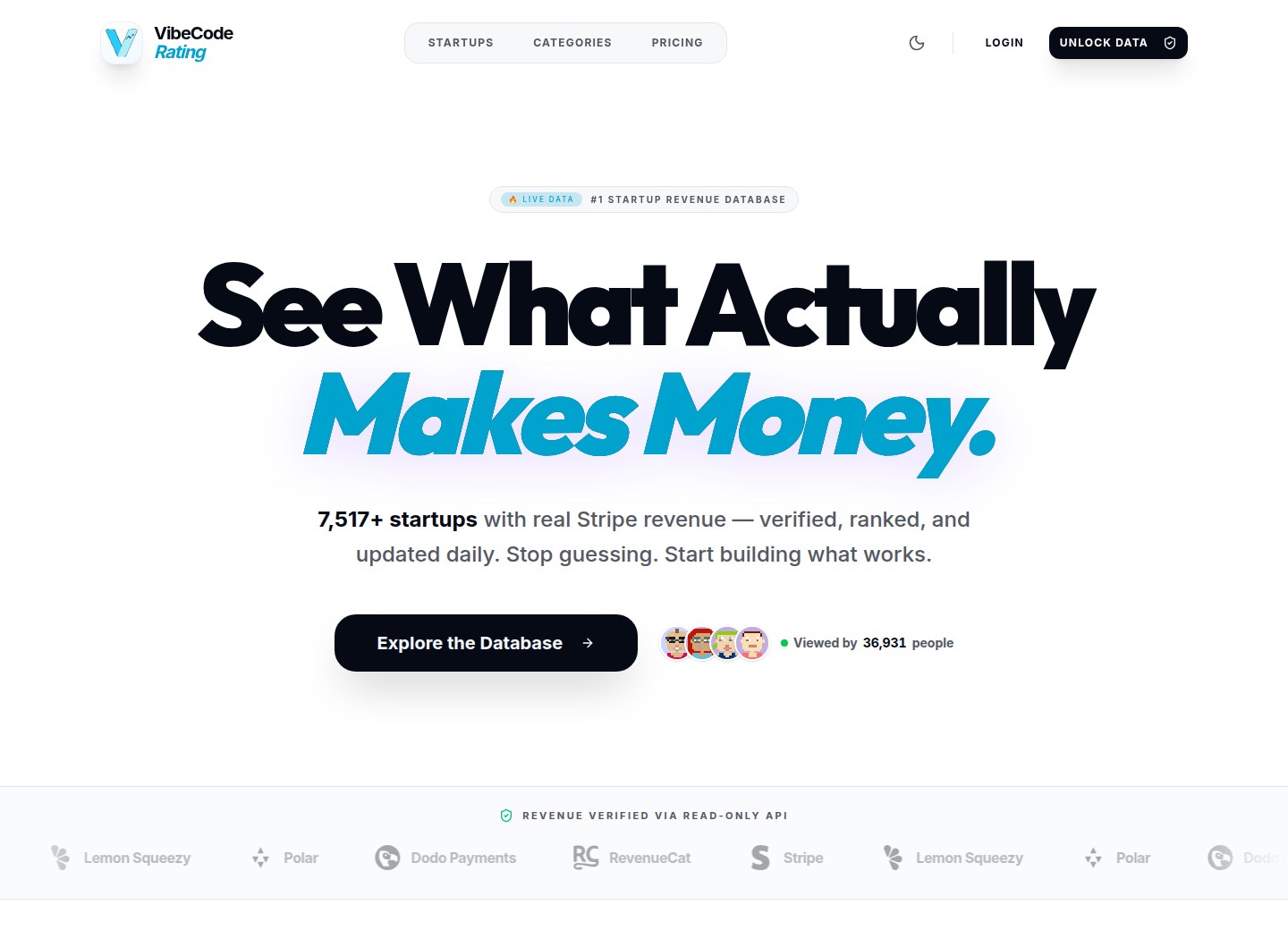
Our VibeCode Rating project collects startup categories, source-reported revenue, geography and growth history. Foresight uses this kind of analysis to compare business models and identify opportunities to test. One startup’s growth does not prove demand for a copy in another market.

Explore the project directory

WHAT YOU RECEIVE

What you can build on.

Foresight evaluates scenarios; it does not guarantee future demand. We separate observations from hypotheses and explain the limits of the data.

  1. A trend map with dated sources
  2. Scenarios for your geography and horizon
  3. Priorities: launch, adapt or pass
  4. Experiments and validation metrics

LET’S BUILD WHAT’S NEXT

What shall we work on?

Choose a product and describe your task. Prepare a short brief and send it to us on Telegram to discuss the approach and scope.

The brief is prepared in your browser. We receive it only when you send it in the chat.